
by Sara Lojo Lendoiro
In interventional radiology (IR), work–life balance is more often discussed in informal conversations than in professional forums. It tends to surface after a long on-call shift, following an unexpected complication, or in those quiet moments when professionals weigh whether to take on new clinical, academic, or leadership responsibilities.
Despite being a recurring concern, work–life balance is still frequently framed as an individual issue, when in reality it is largely a structural one. Reducing it to personal organisation, resilience, or willingness to sacrifice misses the point. Balance in IR is shaped by how the specialty itself is organised: its clinical expectations, its working models, its professional culture, and its ongoing evolution into a discipline that is increasingly clinical as well as technical.
The paradox of a specialty built on intensity
IR attracts professionals drawn to complexity, immediacy, and tangible impact on patient care. It combines technical skill with rapid decision-making and longitudinal responsibility. We intervene in urgent situations, participate in multidisciplinary discussions, follow patients over time, and assume growing responsibility for their overall management.
This evolution has strengthened the specialty, but it has also increased the cognitive and emotional demands placed on practitioners. The traditional image of the interventional radiologist
focused solely on the procedure no longer reflects everyday reality. Today’s IR practice involves moving constantly between procedural work, clinical consultations, follow-up, research, teaching,
and organisational responsibilities. The paradox is clear: the very aspects that make IR meaningful also make it harder to define clear boundaries between professional and personal life.
Medicine has historically developed around an implicit culture of sacrifice. Long hours were interpreted as commitment, exhaustion as vocation, and personal compromise as a sign of professional
maturity. Many senior physicians trained in environments where work–life balance was simply not part of the conversation.
That legacy still lingers. Messages—sometimes explicit, often subtle—continue to suggest that a full personal life, parenthood, or the need for flexibility are difficult to reconcile with
excellence in procedural specialties. These narratives particularly affect younger professionals and contribute to the perception that IR may be a difficult career to sustain in the long term.
This is not only an ethical issue; it is a strategic one. A specialty that relies on continuous sacrifice risks losing talent at the very moment it needs it most.
Fatigue, cognitive overload, and emotional exhaustion directly affect decision-making, communication, and clinical performance. For this reason, work–life balance cannot be separated from patient
safety.
From an organisational perspective, workforce design and clinical pathways are structural determinants of outcomes. Call distribution, protected time for non-procedural activity, and the presence
of resilient teams all influence how reliably care is delivered. When services depend excessively on individual availability, system vulnerability increases. Balance is not achieved by asking
individuals to endure more, but by designing systems that allow professionals to work better. This shifts the discussion from individual responsibility to organisational responsibility.
The invisible emotional workload
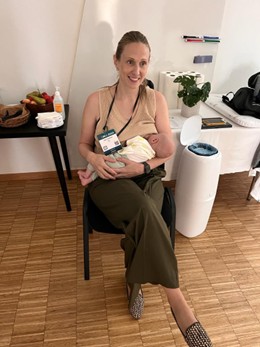
One aspect of IR that is rarely acknowledged is emotional exposure. Interventional radiologists care for complex patients, accept significant clinical risk, and live with uncertainty even when procedures are technically successful. This emotional load does not disappear at the end of the working day.
IR involves direct interaction with patients and families, shared decision-making, and often long-term clinical relationships. This is one of the specialty’s greatest strengths, but it also
increases emotional investment. Without space for reflection, mentorship, or peer support, this burden accumulates quietly, contributing to professional exhaustion and emotional
distancing—outcomes that run counter to the more human model of care the specialty increasingly seeks to promote.
Any discussion of work–life balance in IR inevitably touches on gender dynamics. Procedural specialties have traditionally been structured around linear, uninterrupted career paths that are
difficult to reconcile with different life stages.
The question is no longer whether IR can adapt to different ways of living, but whether it is willing to evolve. Shared leadership models, flexible career pathways, and a more equitable
distribution of responsibilities are not concessions; they are necessary tools for the long-term sustainability of the specialty. Importantly, these changes benefit everyone. New generations of
physicians increasingly seek careers that allow professional meaning without requiring the abandonment of personal life, regardless of gender.
Redefining success
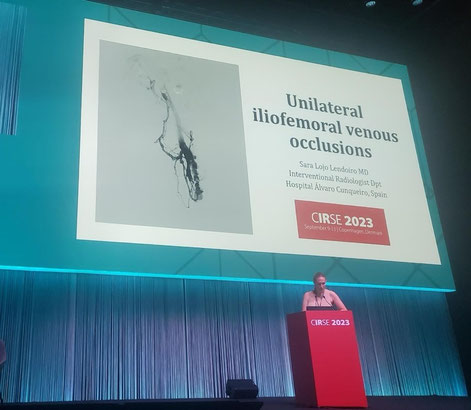
Perhaps the most challenging change is cultural. Success in IR has traditionally been measured through procedural volume, productivity, and technical excellence. While these remain important, they are no longer sufficient as the only markers of professional value.
Success in modern IR should also include the ability to remain curious without becoming exhausted, to teach without burnout, to innovate without chronic overload, and to remain present for
patients without sacrificing personal well-being. Excellence can only be sustained over time if careers themselves are sustainable.
Work–life balance is often framed as a negotiation between professional dedication and personal life. In reality, it is a necessary condition for preserving the qualities that define good
professionals: clinical judgment, empathy, precision, and adaptability.
As IR incorporates new technologies, artificial intelligence, and expanding clinical responsibilities, the specialty faces a clear choice. It can reproduce historical models built on constant
intensity, or it can consciously move towards a more human way of practising medicine.
The future of IR will depend not only on technological innovation, but also on how well it cares for those who practise it. A specialty that protects its professionals ultimately protects its
patients. Work–life balance is not about working less, but about being able to continue choosing over time—choosing how we practise, how we care for patients, and how we live outside the
hospital. IR should not require the renunciation of personal life as proof of commitment, but should allow sustainable careers in which dedication does not come at the cost of everything else
that defines us beyond work.
Write a comment