
by Eva Criado
In interventional radiology, the pager never really stops: The bleeding patient, the septic drain at 17:45h, the “quick case” added just before leaving, the call night that quietly turns into the next working day.
We chose this specialty. We thrive on urgency. We love this!! But nobody talks enough about what happens when emergency mode never turns off. Somewhere along the way, constant availability
began to look like exhaustion, and many of us failed to notice when passion and vocation slowly transformed into burnout.
Burnout in IR isn’t rare. It’s becoming “normal” in a very concerning way.
Surveys show that most interventional radiologists experience emotional exhaustion, detachment, or the persistent sense of never doing enough.
Large international studies report burnout affecting nearly 72% of interventional radiologists, placing IR among the highest-risk specialties in medicine, exceeding rates seen in diagnostic
radiology, surgery, and general population. Female interventional radiologists appear particularly vulnerable, with more than double the risk of burnout, reflecting the combined pressures of
demanding clinical workloads and disproportionate caregiving responsibilities.
In many angio-suites, burnout is no longer the exception; it is the baseline.
Look around your department. Statistically, more than half of your colleagues are struggling in some way: the colleague who never says no; the senior physician who looks permanently tired, the
resident already questioning their future; or maybe you.
This should not surprise us. IR combines nearly every recognized driver of physician burnout, often intensified.
Why IR hits differently?
1. High-impact decisions, zero predictability
IR lives in the emergency lane: ruptured aneurysms, GI bleeds, ischemic limbs. “Just one more case” is rarely the exception; it becomes the workflow. The adrenaline is addictive, but chronic
stress come at a cost.
2. Call that never truly ends
Unlike many specialties, IR call is rarely remote decision-making. It demands physical, procedural, and cognitive performance at 3 a.m., frequently followed by a full clinical day. Sleep debt accumulates while recovery rarely happens., and yes, we normalize it.
3. Maximum responsibility, limited control
Interventional radiologists carry procedural risk and clinical responsibility while often having little influence over scheduling, staffing, or expanding workload demands. High responsibility paired with low control remains one of medicine’s most reliable pathways to burnout.
4. When life starts shrinking
Late cases cancel dinners. Weekends disappear. Personal plans become provisional because emergencies always take priority. Gradually, work expands while life contracts; a trade many of us accept without fully realizing its cost.

Burnout is more than being tired or frustrated. It is associated with significant physical and psychological morbidity, including cardiometabolic disease, chronic pain, depression, insomnia, and
even premature mortality. It affects judgment, attention, empathy and precision, increasing medical errors, and reducing patient satisfaction; a particularly concerning combination in IR. Its
consequences extend beyond physicians themselves. Burnout influences patient safety, team dynamics, teaching quality, innovation, and ultimately the sustainability of our specialty.
Medicine often proposes a simple solution: be more resilient. Download an app, attend a wellness workshop, practice mindfulness between procedures. These interventions may help temporarily, but
evidence consistently shows that burnout is driven far more by systems than by individual weakness. Workload, staffing, autonomy, leadership, and recognition matter far more than personal
toughness.
The issue is not that interventional radiologists lack resilience or strength; the problem is that healthcare systems are simply very effective at consuming unlimited resilience.
If discussed openly, many of us would recognize the same concerns: Our workload is not indefinitely sustainable; loving adrenaline does not mean accepting chronic exhaustion; heroism cannot
compensate for flawed system design.
IR is built on a simple principle: we identify the lesion, understand its pathophysiology, and intervene at the root cause. Burnout deserves the same level of clinical rigor, because treating
symptoms while ignoring the system that creates them is not good medicine.
A personal reflection
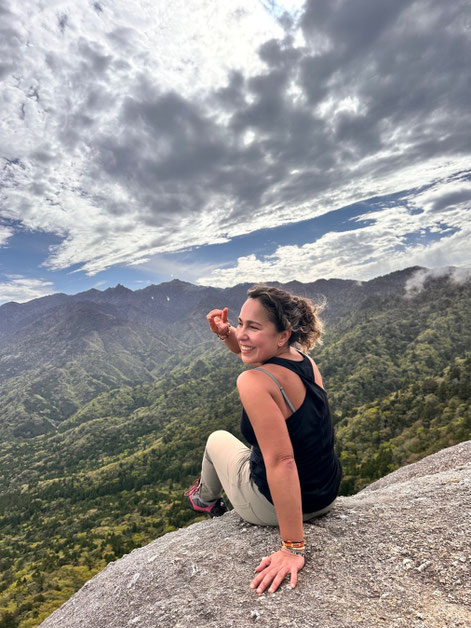
I write this not as an observer, but as an interventional radiologist who has experienced burnout firsthand. We are trained to push harder, stay longer, fix everything, and always remain
available. We become experts at rescuing patients in crisis, yet many of us stop recognizing when we ourselves need rescue.
I know this because I’ve been there: burnout rarely arrives dramatically. It settles quietly behind competence and professionalism. You keep performing, saying yes, then slowly disengage; perform
well but feel less; show up, but empty, until one day you realize you are no longer tired from work, but exhausted by who you have become both at work and in life. We become superheroes for our
patients. Yet nobody teaches us how to care for ourselves with the same dedication.
Learning to pause, listening when exhaustion speaks, setting limits, redefining priorities without guilt. Sometimes, saying no is the most professional decision we can make.
What are we actually doing about it?
Most interventions target the individual, with limited and short-lived effects, while systemic solutions remain rare. Meanwhile, true primary prevention interventions (fixing root causes like
workload and staffing) remain rare.
Surveys of radiology leaders show burnout is widely recognized, but formal mechanisms to measure it and tie it to changes in practice are still the exception. In IR, this gap is especially
concerning, as the specialty risks neglecting one of its most critical patient safety issues.
The future of IR will not depend solely on new devices, advanced imaging, or increasingly complex procedures. It will depend on whether a lifetime as a professional in this specialty remains
sustainable.
System change is essential: smarter scheduling, adequate staffing, protected recovery time, and proper clinical recognition. But cultural change matters equally.
Taking care of ourselves is not weakness. It is quality assurance. The goal is not merely to survive a career in IR, but to remain curious, skilled, and human, thriving in one of medicine’s most
extraordinary specialties for decades.
Being an interventional radiologist can feel like being a superhero. Yet superheroes are not meant to live permanently in survival mode.
Like them, we wear lead aprons to protect ourselves while caring for others. Perhaps they should also remind us that protection extends beyond radiation; to our time, our energy, and our
well-being. Because protecting ourselves ultimately means protecting our patients.
Write a comment
Jim Reekers (Thursday, 28 May 2026 14:57)
Bunout in IR HAS LITTLE to do with exhaustion. Thinking this way is a dead- end street.